
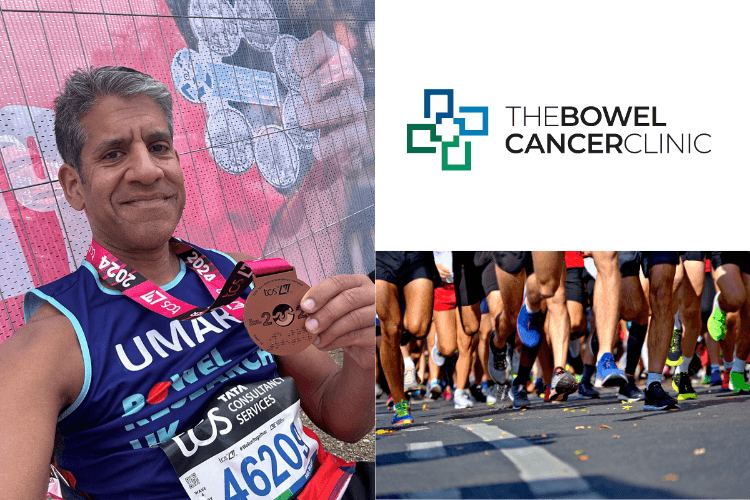
London Marathon Raises Money for Bowel Research UK
We are immensely proud of our colorectal and peritoneal surgeon Mr Umar Shariff, who ran the London Marathon this year...
A cancer diagnosis can be physically and emotionally demanding but while you may be understandably tired and anxious, this doesn’t mean you have to give up physical exercise. In fact, exercising can help you to prepare yourself for cancer treatment. We call this prehabilitation and it is increasingly being recognised as one of the ways to ensure the best possible outcome from treatment.

Certain treatments like chemotherapy and radiotherapy, while highly effective at curing cancer, can also damage healthy cells and this puts an additional strain on the body. So, introducing some gentle exercise into your daily routine can help your body to build strength and resilience which will support your recovery. Even exercising for as little as two weeks before undergoing treatment can make a difference.
There is also evidence that regular exercise following bowel cancer surgery can reduce the risks of the cancer returning. Our physiotherapists are available to help supervise exercise programmes after your treatment.
You don’t need to do anything complicated or join an expensive gym, you can simply walk or join a yoga class or go swimming. Or, you may want to just find ways to increase your day-to-day physical activity, for example by walking up and downstairs, getting off the bus a stop earlier, gardening or joining a walking group. Aim for 30 minutes of moderate exercise every day, if you can. As with any exercise, the key is to choose something you enjoy and will be able to stick to.
Not only will exercising improve your physical strength and fitness, but it will also benefit your mental health. A cancer diagnosis can increase your risk of anxiety and depression, but exercise may provide a welcome distraction, particularly if it gets you outside in the fresh air. Among cancer patients, exercise has been shown to reduce anxiety and depression, combat fatigue, improve physical function, prevent or improve lymphodemia which is swelling in the lymph nodes, and improve overall quality of life. Strengthening exercises such as swimming, weights or yoga, will help to build muscle mass, alongside eating a healthy diet.
Of course, there are many other longer-term benefits to exercise aside from supporting your recovery from cancer. Being more physically active can help reduce your risk of Type 2 Diabetes and heart problems and it can help you to maintain a healthy weight. Being obese is linked to 12 different types of cancer and it also puts a strain on the joints and heart, so losing excess weight will provide lifelong benefits.
These include:
We encourage all our patients to consider exercising as part of their cancer treatment and we can refer you to our team of physiotherapists and dieticians who can provide specialist one-to-one support.

Mr Youssef explained everything to me about my procedure and was shown tobe caring, polite and professional. I felt very safe in his hands.
I was insured with Vitality and my oncologist was not on their panel and referred me to James. He showed exceptional care and knowledge and got me booked in for stereotactic radiotherapy really quickly. I would not hesitate in recommending…
read more
Mr Youssef made me feel completely at ease and relaxed, he was amazing.
Mr Youssef was very friendly, giving a personal experience.
Topical information about bowel cancer, prevention, diagnosis, treatment and living with cancer.
We are immensely proud of our colorectal and peritoneal surgeon Mr Umar Shariff, who ran the London Marathon this year...
What a fantastic presentation at the Peritoneal Surface Oncology Group International conference in Venice, on 4th to 6th October 2023,...
Our team from the Bowel Cancer Clinic and Birmingham Peritoneal Tumour Unit attended the Peritoneal Surface Oncology group international meeting...